
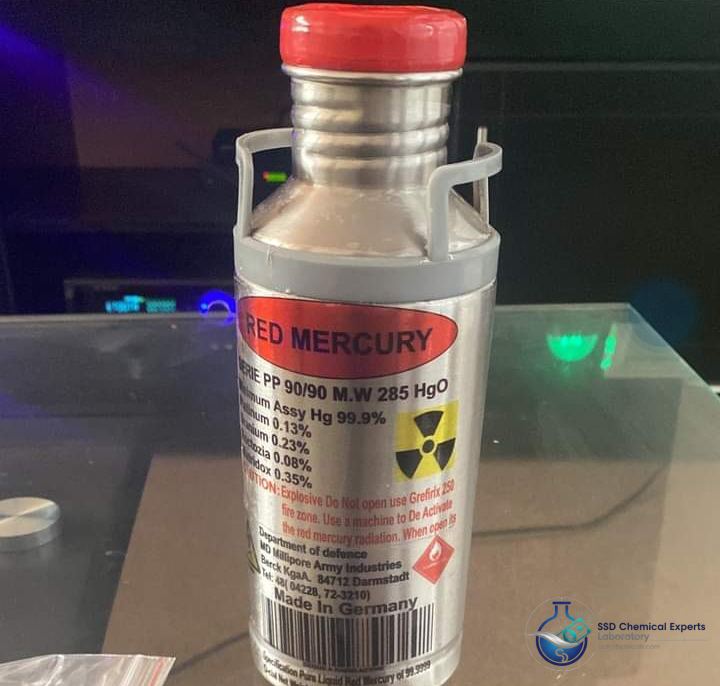
What Red Mercury Actually Is
“Quality red mercury” does not exist. The International Atomic Energy Agency (IAEA) concluded decades ago that the alleged principles behind red mercury are impossible. The whole thing, “in all probability, seems to be a hoax” . Furthermore, the IAEA has stated bluntly: “Red Mercury does not exist” . Despite persistent rumors, no verified sample has ever demonstrated unusual properties. Analytical tests on confiscated samples consistently show they contain only ordinary mercury compounds, mercury oxide, or mercury mixed with red dye .
How the Scam Works
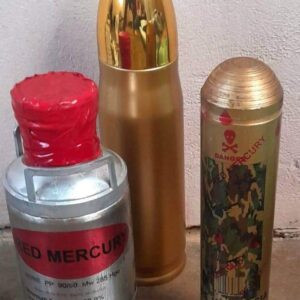
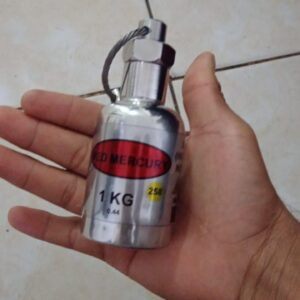
Offers for “quality red mercury” follow a predictable fraud pattern. Sellers bundle impressive-sounding specifications with forged certificates of authenticity . Victims are told the substance has strategic value and can be resold at enormous profit. They are then asked to pay upfront fees for “verification,” “shipping,” or “customs clearance.” Chinese authorities recently dismantled a major red mercury scam network that used forged government documents and fake official identities. The scammers impersonated military officers and government officials to convince victims they were participating in authorized international trade .
Why the Myth Persists
The red mercury legend originated during the Cold War. Soviet intelligence spread rumors about a mysterious nuclear material capable of enabling miniature nuclear devices or enhancing bomb yields . The myth resurfaced after the Soviet collapse, when economic chaos created fertile ground for get-rich-fast schemes. Ukrainian military intelligence recently debunked yet another attempt by Russian operatives to revive the hoax in Syria, calling it “the same outdated playbook from the 20th century” . The “quality” descriptor adds a veneer of authenticity, making the offer seem more credible to sophisticated buyers .
Legal and Safety Dimensions
Even legitimate mercury is heavily regulated. The Minamata Convention, a global treaty with over 150 parties, restricts international trade in mercury and requires written consent for imports . Anyone offering “quality red mercury” without proper documentation is operating illegally by definition. Furthermore, actual mercury is highly toxic. The IAEA warns that some scam artists may believe they possess red mercury when they actually hold radioactive or dangerous materials—one Thai case involved a sample containing Cesium-137 .
Buyer Guidance
If you encounter an offer for “quality red mercury,” treat it as fraudulent. Do not send money. Do not share personal information. Report the solicitation to your national fraud authority. The “quality” promise is simply a marketing tactic—it adds no legitimacy to a substance that does not exist.


Reviews
There are no reviews yet.